
The common misconception is that good autumn layering means wearing more clothes. It does not. The goal is to use fewer, better-shaped layers that trap warmth without making your shoulders, waist, or arms look crowded.
Why Autumn Layering Is Not About Adding More Clothes
Warmth comes from air, not thickness
A useful outfit has three jobs. The first layer manages moisture. The middle layer holds warm air close to the body. The outer layer blocks wind and light rain. A thin merino cardigan can do more than a bulky acrylic sweater because wool regulates temperature and stays comfortable across a wider range of conditions. A large scarf helps at the neck, but it cannot replace a coat that blocks wind.
Shape matters as much as fabric
Start with a fitted base, add one layer with room through the chest and upper arm, then finish with an outer layer that still allows movement. Leave roughly 2 to 4 inches of ease around the bust when buying a trench for a cardigan underneath. If the coat pulls across the back or the cardigan bunches at the elbow, the outfit will look tight even when the garments are technically the right size. The clear verdict: build warmth from thin layers with different jobs, not three thick sweaters stacked together.
How to Choose a Cardigan That Sits Under a Coat
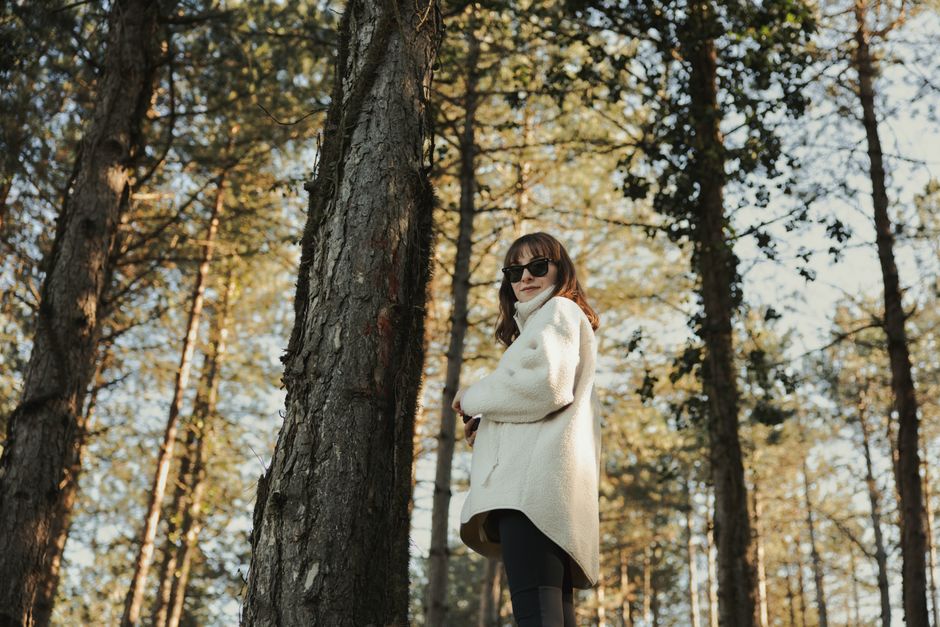
Pick smooth wool for the middle layer
For most women, the UNIQLO Extra Fine Merino V-Neck Cardigan is the practical starting point. It uses 100% wool with a 19.5-micron fiber, has a smooth surface, and can be machine-washed on a gentle cold cycle. That fine knit slides under a coat more easily than chunky alpaca or cable wool. Choose navy, charcoal, camel, or burgundy so the cardigan works with denim, black trousers, and skirts.
Check the sleeve and hem before the color
Put the cardigan on over the top you normally wear in autumn. Bend your arms, sit down, and button it fully. The cuff should stop at the wrist bone, and the hem should not flare sharply over the hips. A V-neck works well under a scarf because it leaves less fabric around the throat. A crew neck is better when you want the cardigan to function as a top. My pick is the UNIQLO merino cardigan for daily commuting because the 19.5-micron knit gives you warmth without the bulk that makes trench sleeves difficult to pull on. Skip a very long cardigan if your coat ends at the hip; the two hems will compete and shorten the look.
Cardigan, Trench, or Scarf: Which Layer Does the Work?
Match the garment to the weather problem
| Layer | Best job | Useful specification | Common mistake |
|---|---|---|---|
| Merino cardigan | Light warmth indoors and outdoors | 19.5-micron, 100% merino wool; machine-washable options exist | Buying a chunky knit that cannot fit under the coat |
| Burberry Kensington trench | Wind and light rain protection | 100% cotton gabardine; 97 cm mid-length; $2,850 on the US official site | Expecting cotton gabardine to replace an insulated winter coat |
| Acne Studios Canada New scarf | Neck warmth and color contrast | Oversized wool style; $270 on the US official site | Choosing a scarf so large that it hides the coat collar |
The order of importance
Buy the cardigan first if your main problem is cold offices and changeable indoor temperatures. Buy the trench first if wind and sudden showers ruin your commute. Buy the scarf first if your coat already works but your outfits look flat. These pieces do not perform the same job, so a high price does not make one a substitute for another.
The clear value verdict
The UNIQLO merino cardigan gives the most useful warmth per dollar. The Burberry Kensington is the strongest long-term trench choice for someone who wants a structured, shower-resistant cotton coat and accepts the $2,850 cost. The Acne Studios Canada New scarf is the best statement layer when texture and color matter more than packability.
How to Build a Warm Outfit Without Bulk
Keep the base layer close to the body
Use a thin T-shirt, fine long-sleeve top, or lightweight blouse as the first layer. Cotton feels familiar, but it can stay damp after walking quickly or moving between heated rooms. Merino or a smooth synthetic blend dries faster and usually needs less washing between wears. The first layer should fit close without cutting into the armpits. If the fabric wrinkles heavily under the bust, it is too tight or too short.
Place volume where it improves the silhouette
Use only one noticeably relaxed piece at a time. A roomy cardigan works with straight trousers. A fitted cardigan works under a belted trench. A large scarf works best when the coat collar stays simple. Avoid combining a balloon sleeve, oversized scarf, long cardigan, and wide-leg trousers unless you deliberately want a dramatic silhouette. The eye needs one clear line to follow.
Use color to make the layers look planned. Keep two pieces in the same color family, then add one contrast. Camel over cream looks soft. Navy over white looks sharp. Olive with burgundy feels distinctly autumnal without relying on a novelty print. The coat should usually be darker or calmer than the scarf, because a busy outer layer makes the entire outfit harder to balance.
Length also controls warmth. A cardigan that ends just below the waistband works with high-rise trousers. A hip-length trench suits that proportion. If the cardigan reaches mid-thigh, choose a longer coat or tuck the cardigan edge inward. Exposed knit below a shorter coat catches wind and creates a visible second hem. The best low-bulk outfit usually has one fitted layer, one soft layer, and one protective layer.
A Five-Minute Layering Routine for Cold Mornings
Use this order every time
- Start with a close-fitting base top. Check the neckline before adding jewelry or a scarf.
- Add the cardigan and button only the middle button if you want a longer vertical line. Button all the way when wind is strong.
- Put on the coat and move both arms forward. If the back pulls, remove the cardigan and test the coat with a thinner base. If it still pulls, the coat is too narrow for your normal layering.
- Set the scarf after the coat is closed. Drape it once for a clean look, or wrap it twice when the temperature drops. Keep the ends above the hem of a short coat.
- Check the three visible edges: neckline, sleeve cuff, and hem. Each should look intentional. Hide extra fabric rather than adding another layer.
Make the routine work with real weather
For a cool, dry morning, use a base top and cardigan under an unlined trench. For wind, close the trench and wrap the scarf once around the neck. For light rain, fasten the throat latch if your coat has one and keep the scarf inside the collar so it does not absorb water. For a heated office, choose a cardigan with buttons rather than a pullover; you can remove it without disturbing your hair, blouse, or makeup. This routine keeps the outfit adaptable without adding unnecessary pieces.
The Mistakes That Make Autumn Layers Look Messy

Fix the fit before buying another color
- Buying the coat first in your usual size: a size label means little across brands. Try the coat over your thickest planned cardigan and check the armhole, shoulder seam, and back vent.
- Choosing a scarf by length alone: measure the fabric. A scarf around 30 to 35 cm wide gives warmth without swallowing a narrow face or small coat collar.
- Mixing too many textures: cable knit, brushed wool, fringe, corduroy, and suede can compete. Pick two strong textures and keep the rest smooth.
- Ignoring the hem line: three visible hems at different lengths often look accidental. Repeat one length or create a clear short-to-long progression.
- Using a scarf to solve a coat problem: a scarf cannot fix a draft through an open front, a thin lining, or sleeves that end above the wrist.
Know when not to buy
Do not buy a pale cardigan if you will avoid wearing it because of makeup transfer or frequent cleaning. Do not buy a belted trench if you dislike adjusting a belt throughout the day. Do not buy an oversized scarf if you commute by bike, carry a shoulder bag, or need a clear view while walking. The most useful autumn piece is the one that fits your actual routine, not the one that looks impressive on a product page.
Which Autumn Layering Set Should You Buy?
What is the best everyday combination?
For most women, choose a fine merino cardigan, a mid-length cotton trench, and one medium-weight wool scarf. This combination covers office air conditioning, cool walks, wind, and light rain without forcing you into a bulky winter coat. The UNIQLO Extra Fine Merino cardigan is the practical value pick. The Burberry Kensington is the luxury trench pick for buyers who want a structured cotton-gabardine coat with room for layering. The Acne Studios Canada New is the statement scarf pick when you want visible texture and a strong color accent.
When should you choose a different setup?
If your autumn is warm and dry, skip the heavy scarf and choose a light cotton cardigan over a shirt. If rain is frequent, choose a technical water-resistant shell instead of paying for a cotton trench that needs specialist cleaning. If you walk outdoors for hours, buy an insulated coat rather than trying to create winter warmth from three fashion layers. The final test is simple: put on the full outfit, sit, raise your arms, and walk for five minutes. If you keep adjusting one piece, that piece is the wrong choice.