Berry lipstick sits between red and plum, but the best autumn shade depends on your undertone, natural lip color, and preferred finish.
How to Find Your Undertone Before Choosing Berry Lipstick
The word berry covers many colors: raspberry, cranberry, mulberry, wine, blackberry, and brown-plum. A shade can look rosy on one person and purple or brick-red on another because lipstick mixes with the color already present in the lips.
Use three quick undertone checks
- Look at the veins on the inside of your wrist in daylight. Blue or violet veins often point to a cool undertone; green veins often point to a warm undertone. If you see both, neutral is a useful starting point.
- Hold a silver earring and a gold earring near your bare face. If silver makes your skin look clearer, cool berry shades may suit you. If gold adds warmth, test red-plum or berry-brown colors. If both work, start with a balanced berry.
- Check how your skin reacts to white and cream clothing. Bright white often supports cool coloring, while cream often supports warm coloring. This is only a guide, not a rule.
Match shade depth to your natural contrast
Undertone is only half the decision. If your hair, eyes, and skin have low contrast, a sheer raspberry or soft rose-plum usually looks more natural than an opaque black cherry. High-contrast coloring can carry a deep wine or blackberry shade without the lips overwhelming the face. Pale lips may need a slightly brighter berry to prevent a dark shade from looking flat. Naturally pigmented lips may need a stronger formula because sheer color will blend into the existing tone.
Best starting point: choose a medium-depth berry with a neutral red base. It gives you enough autumn richness without forcing you into a purple or brown result.
Which Berry Tone Fits Warm, Cool, and Neutral Skin?
The most useful way to choose a berry lipstick is to match the color family first and the brand second. Use the chart below as a testing order, then adjust for your lip pigmentation and makeup contrast.
| Undertone | Berry family to test | Finish with the safest result | Common warning sign |
|---|---|---|---|
| Cool | Raspberry, cranberry, blue-red plum | Soft matte or satin | Orange-red berry looks too bright or makes the skin appear sallow |
| Warm | Brick berry, red wine, berry-brown | Cream or satin | Blue-purple shades can look gray or disconnected from the face |
| Neutral | Balanced wine, rose-plum, muted cranberry | Sheer balm or satin | Very yellow or very blue shades may dominate the face |
| Olive | Mulberry, brown-plum, muted blackberry | Satin or blurred matte | Bright pink berry can emphasize green or gray tones in the skin |
Read the color family before the shade name
Names such as wine, berry, and burgundy are not standardized. One brand’s wine may be a cool purple, while another’s may be a warm red-brown. Swatch the lipstick on your inner wrist only to compare undertones; the final test should happen on the lower lip because lip color changes the result.
The strongest everyday verdict
For a first autumn berry, choose a satin cranberry with a neutral or slightly red base. It is easier to wear than a blue-violet plum, photographs well in low autumn light, and can move from one light layer to a deeper evening color.
How to Apply Berry Lipstick So It Looks Even
Berry pigment makes small application mistakes more visible, so the order matters. The most reliable routine takes five minutes and uses less product than most people expect.
Five-step application method
- Condition first. Apply a thin layer of lip balm, wait two minutes, then blot the excess. A thick balm layer can make the color slide.
- Trace the natural lip edge with a matching berry or neutral rose pencil. Do not draw far outside the lip line; dark pigment makes overlining easy to see.
- Apply lipstick from the center of the lower lip outward. Press the lips together once, then fill the corners with a small brush or the edge of the bullet.
- Blot with one tissue layer. Add a second thin coat only where the color looks uneven. This builds depth without creating a heavy rim.
- Clean the outer edge with a small amount of concealer on a flat brush. Keep the correction narrow so the mouth still looks soft.
Fix the failures that make berry color look harsh
Dry flakes can make satin lipstick look cracked, but aggressive scrubbing can leave the lips red and more sensitive. Use a damp washcloth once or twice a week and apply balm at night. If the color feathers, the issue may be excess skincare or a slippery balm rather than the lipstick itself. Blot the lips, redraw the corners, and keep the richest pigment in the center.
For a softer daytime result, tap lipstick on with a fingertip and blur the border. For stronger evening color, keep the edges defined and use a satin finish instead of adding layers of dry powder.
Which Real Berry Lipsticks Earn a Place in an Autumn Bag?
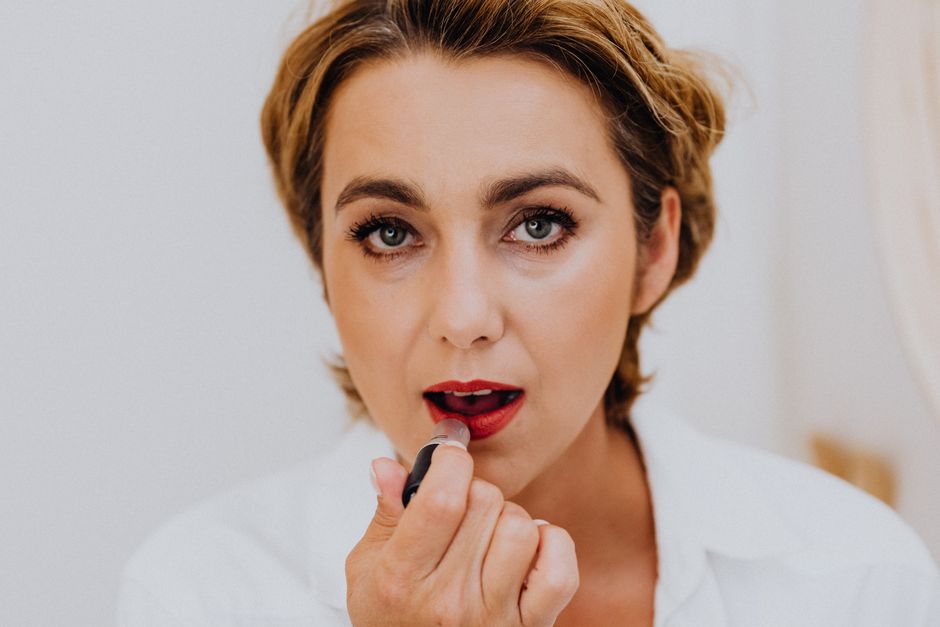
My clear pick for most people is Clinique Almost Lipstick in Black Honey. Its sheer, buildable texture makes berry color less risky, especially when you are still learning which depth suits your face. Prices below are typical U.S. list prices and can change by retailer or promotion.
Best sheer option: Clinique Almost Lipstick in Black Honey
Clinique Almost Lipstick in Black Honey is about $25 for 0.06 oz. The balm-like formula gives a soft shine and lets natural lip color show through, so it does not create a hard purple block. It works best for low- to medium-contrast makeup and dry lips. Choose this one when you want a forgiving autumn berry that needs little precision. Its tradeoff is wear time: the sheer finish needs reapplication after meals.
Best blurred matte: MAC Powder Kiss Lipstick in Burning Love
MAC Powder Kiss Lipstick in Burning Love is typically about $25 for 0.12 oz. The shade reads as a deep berry with a soft-focus matte finish rather than a sharp liquid lip. It suits medium and high contrast looks, particularly with minimal eye makeup. Choose MAC Burning Love for a more polished evening result. Skip it when your lips are peeling, since the blurred matte texture can still catch on dry patches.
Best buildable balm: Bobbi Brown Crushed Lip Color in Cranberry
Bobbi Brown Crushed Lip Color in Cranberry is usually about $33 for 0.11 oz. The texture combines a balm feel with a soft stain effect, and two layers create a clearer cranberry tone without looking painted on. It is the best choice for someone who wants color that starts casual and becomes richer later. The finish is less glossy than Clinique Black Honey and less opaque than a classic full-coverage lipstick.
Best lower-cost experiment: Revlon ColorStay Satin Ink in Partner in Wine
Revlon ColorStay Satin Ink in Partner in Wine is commonly priced near $10 to $12 for 0.17 fl oz. The liquid formula gives more coverage and longer wear than a balm, with a satin finish that looks less flat than traditional matte liquid lipstick. Choose it for events or long workdays. Apply a thin layer; too much product can feel heavy and emphasize lip texture.
When Should You Skip a Berry Lipstick?
Berry lipstick is not automatically flattering because it is an autumn color. The wrong depth, finish, or formula can make the face look tired, sharpen dry texture, or clash with the rest of the makeup.
Should you skip a very dark berry?
Skip a black cherry or deep blackberry shade when your lips are heavily pigmented and you want a light daytime look. Dark pigment can turn uneven if the center of the lips is lighter than the edges. A sheer cranberry or rose-plum gives a similar seasonal mood with better control. Deep shades also need careful removal; rubbing hard can irritate the delicate skin around the mouth.
When is a matte formula the wrong choice?
Choose satin or balm instead of matte when your lips feel tight, flaky, or sensitive. Matte formulas can make texture more visible, especially in cold, dry weather. A creamy finish does not always last as long, but it keeps the color from looking cracked and lets you refresh it without rebuilding the entire lip.
What common shopping mistake should you avoid?
Do not buy a shade because it looks berry in the tube. Test the color on your lower lip in daylight, wait several minutes, and check it beside your usual blush. If the lipstick makes your skin look gray, orange, or unusually pale, the undertone is wrong even if the shade is fashionable. The most reliable autumn berry is the one that gives the face clearer color while still looking like part of the wearer, not a separate costume.
The best berry lipstick shade for autumn is a medium-depth color matched to your undertone, natural lip pigmentation, and preferred finish.