
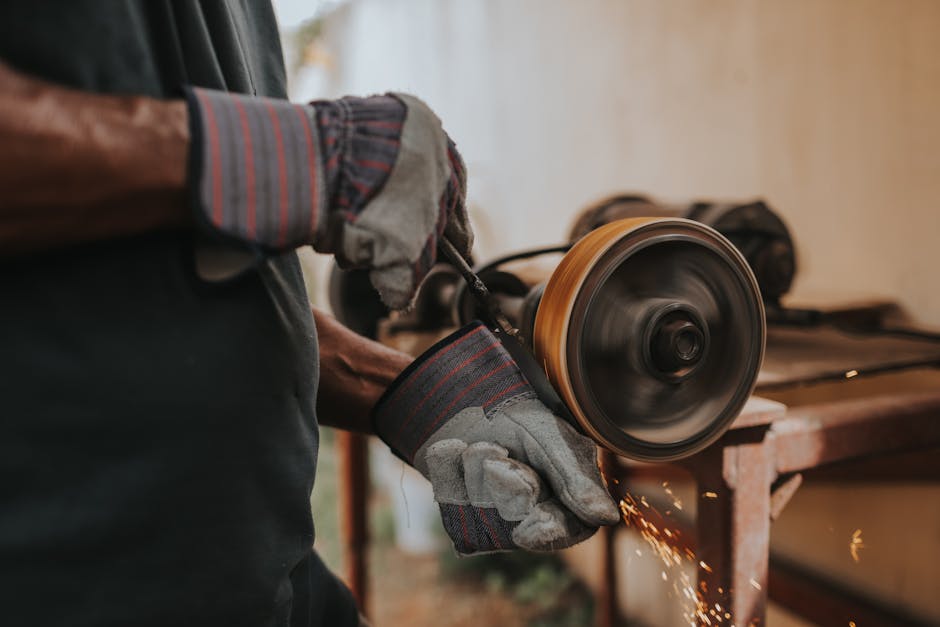
Most people think a belt grinder is just for hogging material, for rough work. They see sparks fly and assume it’s all brute force. That’s a fundamental misunderstanding. A belt grinder, when properly understood and operated, is one of the most precise, versatile tools in a metalworker’s arsenal. It’s not just about removing metal fast; it’s about shaping, refining, and finishing with control that other tools can’t touch. If you’re only using yours for deburring rough cuts, you’re leaving 90% of its capability on the table. You need to recalibrate your expectations for this machine.
Drop the Myth: Belt Grinders Aren’t Just for Rough Work
Let’s get this straight: a belt grinder isn’t some crude shop beast only good for taking off massive chunks of steel. That’s a rookie’s view. This machine, in the right hands, is a precision instrument. It can perform aggressive stock removal, sure, but it’s equally capable of achieving mirror polishes, perfect blade bevels, and incredibly tight tolerances for fit and finish. Anyone telling you otherwise probably hasn’t bothered to learn its true potential. They’re likely stuck using inferior tools for jobs a belt grinder would finish faster and better. It’s time to ditch that misconception.
Why Your Angle Grinder Fails Here
An angle grinder is the wrong tool for precision. Period. It’s designed for quick cuts, heavy material removal, and general fabrication where a pristine finish isn’t the goal. Trying to put a clean edge on a knife or flatten a piece of metal with an angle grinder is like trying to paint a portrait with a broom. You lack control over the grinding surface, the angle, and the pressure. The wheel loads unevenly, creates inconsistent finishes, and generates excessive heat that can ruin your workpiece. It’s a tool of compromise, not precision. You get what you pay for in terms of control.
The True Capability: Fine Finishing to Mirror Polishes
This is where belt grinders truly shine. The ability to swap belts in seconds, combined with precise tool rests and platens, transforms the machine. You start with aggressive ceramic belts, maybe 36 or 60 grit, for rapid material removal. Then, you progress. Move to 120, 220, 400 grit for refinement. From there, you can go to 800, 1000, 2000 grit and beyond with conditioning belts or even leather stropping belts loaded with compound. You can achieve a dull matte finish or a surgical mirror polish. Manufacturers like 3M, Norton, and Klingspor produce belts in every conceivable grit and material, purpose-built for this exact progression. This versatility is unmatched. If your grinder has variable speed, that control multiplies your options, preventing heat damage on delicate finishes or thin edges.
Setting Up Your Grinder for Knife Sharpening: The Right Way

Knife sharpening on a belt grinder is an art, but it’s an art built on solid technique. Forget those pull-through sharpeners; they’re glorified edge-destroyers. A belt grinder offers superior control, consistency, and the ability to repair or reprofile blades no other tool can. But you need to set it up correctly, or you’ll ruin good steel fast. Start by ensuring your belt tension is correct – too loose, and it’ll wander; too tight, and you stress the motor and bearings. Tracking is next; the belt needs to run true on the wheels without rubbing the frame. Adjust the tracking knob until it runs perfectly centered. Finally, your tool rest. This is critical for consistent angles. Secure it firmly, set your desired angle, and double-check it. Safety gear is non-negotiable: eye protection, hearing protection, and a respirator for metal dust. If you’re not using them, you’re an idiot.
Selecting the Right Belts for Sharpening
Choosing the right belt is half the battle. You don’t just grab “a grinding belt.” For serious reprofiling or fixing a severely damaged edge, start with a coarser grit. A 80-120 grit ceramic or zirconia alumina belt will remove material quickly and efficiently. These belts are aggressive but durable. Once you’ve established the correct geometry, move to progressively finer grits. A common progression might be 220, then 400, then 800 or 1000 grit aluminum oxide or silicon carbide belts. For a truly refined edge, you can go even higher, using fine conditioning belts or a leather strop belt with chromium oxide compound. Belts from reliable manufacturers like Gator Grit, Klingspor, or Combat Abrasives offer consistent performance. Don’t cheap out on belts; good abrasives make all the difference in finish and longevity.
Mastering the Angle and Pressure
Consistency is everything in sharpening. If you’re freehanding, it takes practice. A sharpening jig, often a simple sliding carriage that holds the blade at a fixed angle, can be a for beginners. Whichever method you choose, light pressure is key. Let the belt do the work. Too much pressure generates excessive heat, which can ruin the heat treatment of your blade, making the edge soft and prone to rolling. You’ll see a blue temper color if you’re pushing too hard. Don’t do that. For most sharpening, use an edge-trailing pass; the blade’s edge moves away from the grinding contact. This is safer, reduces burr formation, and gives you better control over the final edge. Edge-leading is for aggressive stock removal or specific convex grinds, but it’s far more dangerous and unforgiving for finishing. A common angle for kitchen knives is around 15-20 degrees per side, while outdoor knives might be 20-25 degrees. Practice on junk knives until you get the feel for it.
Optimal Belt Selection & Speed for Different Materials
Matching your belt and speed to the material isn’t optional; it’s critical. One size does not fit all. If you try to grind aluminum with a general-purpose fine belt at high speed, you’ll clog it instantly. If you hit hardened tool steel with a cheap aluminum oxide belt, you’ll just glaze it and go nowhere. This isn’t rocket science, but it demands attention to detail. Get it wrong, and you waste belts, time, and potentially ruin your workpiece. There are no shortcuts here.
Material Considerations
- Steel: The most common material for belt grinders. For hardened steels (like D2, S30V, or 440C), you need aggressive, durable belts like ceramic or zirconia alumina. These are self-sharpening and cut fast without excessive heat. Softer steels (mild steel, 1075, O1) can be handled by aluminum oxide or zirconia, but ceramic offers superior performance and longer life.
- Aluminum: notorious for loading belts. Use open-coat belts, often silicon carbide, and run at much slower speeds. A belt cleaning stick is essential. Excessive heat will cause the aluminum to gum up the belt, making it useless.
- Wood/Plastics: Very different. You generally want aluminum oxide belts, sometimes with a specific anti-loading coating. Speeds are typically lower to prevent burning wood or melting plastic. Fine grits can achieve incredibly smooth finishes on wood for furniture or custom handles.
Variable Speed Control is Non-Negotiable
If your belt grinder doesn’t have variable speed, you’re hobbled. Period. Variable frequency drives (VFDs) are essential for maximizing the grinder’s utility. They let you dial in the exact surface feet per minute (SFPM) needed for the material and task. You need slow speeds for heat-sensitive materials like aluminum or thin knife edges. Slow speeds also give you more control for fine finishing, intricate work, or when working with small parts. High speeds are for aggressive stock removal on hard, dense metals where heat is less of a concern. Running everything wide open is amateur hour. A good 1.5 HP motor with a VFD, common on 2×72 machines from manufacturers like KMG, Beaumont Metal Works, or even higher-end Grizzly models, offers that critical control.
| Belt Type | Primary Use | Key Characteristics |
|---|---|---|
| Aluminum Oxide | General purpose, wood, softer metals | Good all-rounder, cost-effective, decent life |
| Zirconia Alumina | Aggressive stock removal, hardened steels, stainless steel | Self-sharpening, long life, cooler grinding |
| Ceramic | Heavy stock removal, high-performance alloys, heat-sensitive materials | Extremely aggressive, very long life, sharpest cut, premium price |
| Silicon Carbide | Non-ferrous metals (aluminum, brass), glass, stone, fine finishing | Very sharp, excellent for hard/brittle materials, can load easily on soft metals |
When a Bench Grinder Just Won’t Cut It

A bench grinder is for rough work. End of story. It’s for deburring, quickly shaping a chisel, or sharpening a lawnmower blade – tasks where precision and finish quality are secondary. Its solid, inflexible wheels load up easily, generate excessive heat, and make it nearly impossible to achieve a consistent angle or a smooth, refined surface. Don’t even try to sharpen a good knife on one. A belt grinder, even a basic 1×30 or 2×42 hobby model, offers vastly superior control, versatility, and finish capability. There’s simply no contest if you care about your work.
Common Belt Grinder Headaches: Solved
Even the best belt grinders can throw a wrench in your workflow if you don’t understand their quirks. Most issues are minor and easily fixed, but ignoring them will cost you time, belts, and frustration. Don’t just fight the machine; understand why it’s misbehaving. A well-maintained grinder is a pleasure to use, and a neglected one is a liability. Pay attention to the details.
Why is my belt tracking off?
Belt tracking issues are infuriating but usually simple. First, check your belt tension; too loose, and it will wander; too tight, and it can fight the tracking mechanism. Next, inspect your idler wheel and drive wheel for wear or debris. A build-up of gunk or a worn bearing can cause erratic tracking. Most grinders have a tracking knob or lever; make small, precise adjustments while the grinder is running until the belt centers itself. It often takes a bit of back-and-forth. Patience is key. If your machine is poorly designed or has cheap components, tracking can be a constant battle. Higher-quality grinders from companies like Kalamazoo or JET tend to have more robust tracking mechanisms.
How do I prevent belt loading and glazing?
Belt loading—when grinding particles get clogged with material—is a common problem, especially with softer metals like aluminum or when grinding painted surfaces. First, use a belt cleaning stick; it’s a rubber-like abrasive cleaner you press against the running belt to dislodge trapped material. Second, ensure you’re using the correct belt type and grit for your material. Aggressive ceramic belts load less than aluminum oxide on hard steels. For aluminum, look for open-coat silicon carbide belts, and run them at slower speeds. Don’t apply excessive pressure; let the abrasive do the work. Over-pressuring generates heat, which can soften the workpiece material, causing it to smear and load the belt faster. Sometimes, you just need a fresh belt. They don’t last forever.
What about motor overheating during heavy use?
Motor overheating is a sign you’re pushing your machine too hard or it’s improperly spec’d for your work. First, give your machine breaks during heavy stock removal. Let the motor cool down. Second, ensure adequate ventilation around the motor; don’t block cooling vents. Dust buildup inside the motor can also act as insulation, so regular cleaning (with compressed air) is important. If you consistently push a 1/2 HP hobbyist unit to do the work of a 2 HP industrial grinder, it’s going to overheat. For heavy metal fabrication or prolonged grinding, you need a powerful, continuous-duty motor, typically 1.5 HP or more, often three-phase with a VFD for optimal control. Brands like Grizzly and JET offer models with various horsepower ratings to match different demands. Don’t expect a small motor to handle big jobs without complaint.
So, forget the idea that a belt grinder is a blunt instrument. That’s for amateurs. It’s a precision tool, capable of everything from aggressive material removal to mirror-smooth finishes. Mastering its belts, speeds, and techniques will unlock a level of control and quality in your metalwork that you simply cannot achieve with lesser tools. Once you understand this, you’ll stop fighting your grinder and start making it work for you, delivering the professional results you always wanted.